Tennessee GOP House Map Targets Trump, Blackburn Win Margins in 2024 Elections
Election data reveals Tennessee’s new congressional map was precisely drawn to ensure Trump won 60% in all districts and Blackburn carried each seat, abandoning traditional redistricting principles.

NASHVILLE, TENNESSEE — Tennessee’s new congressional map was crafted to ensure Republican Donald Trump secured at least 60% of the vote in all nine districts during the 2024 presidential election and that Senator Marsha Blackburn carried each district in her 2018 Senate race, according to election data analysis.
The redistricting plan, which appeared on Blackburn’s social media pages shortly after the U.S. Supreme Court struck down part of the Voting Rights Act, effectively removes the state’s only majority-Black, majority-Democratic congressional district centered in Memphis. Republicans expedited the map through the legislature to strengthen their position in upcoming midterm elections.
Narrow Victory Margins Reveal Strategy
Voting data analyzed by the Tennessee Lookout using Dave’s Redistricting shows Blackburn won three districts by narrow margins during her 2018 Senate campaign against Democratic former Governor Phil Bredesen. In districts 4, 5, and 9, Blackburn’s winning margin was less than 1,000 votes, representing 0.4% or less of the total vote.
Blackburn failed to reach 50% of the vote in any of those three districts, highlighting how precisely the new boundaries were drawn to meet the dual criteria of Trump’s 2024 performance and Blackburn’s 2018 results.
Traditional Redistricting Principles Abandoned
Ken Syler, a political science professor at Middle Tennessee State University, said the new map breaks with traditional redistricting practices that typically aim to minimize county splits. The current plan divides more counties than any previous Tennessee congressional map.
“It’s part of the partisanship environment we’re living in,” Syler said, noting that in previous redistricting cycles, both Democratic and Republican lawmakers were more careful about respecting county boundaries.
The departure from conventional map-drawing suggests lawmakers prioritized partisan advantage over geographic and community considerations when crafting the districts.
Legal Challenges Mount
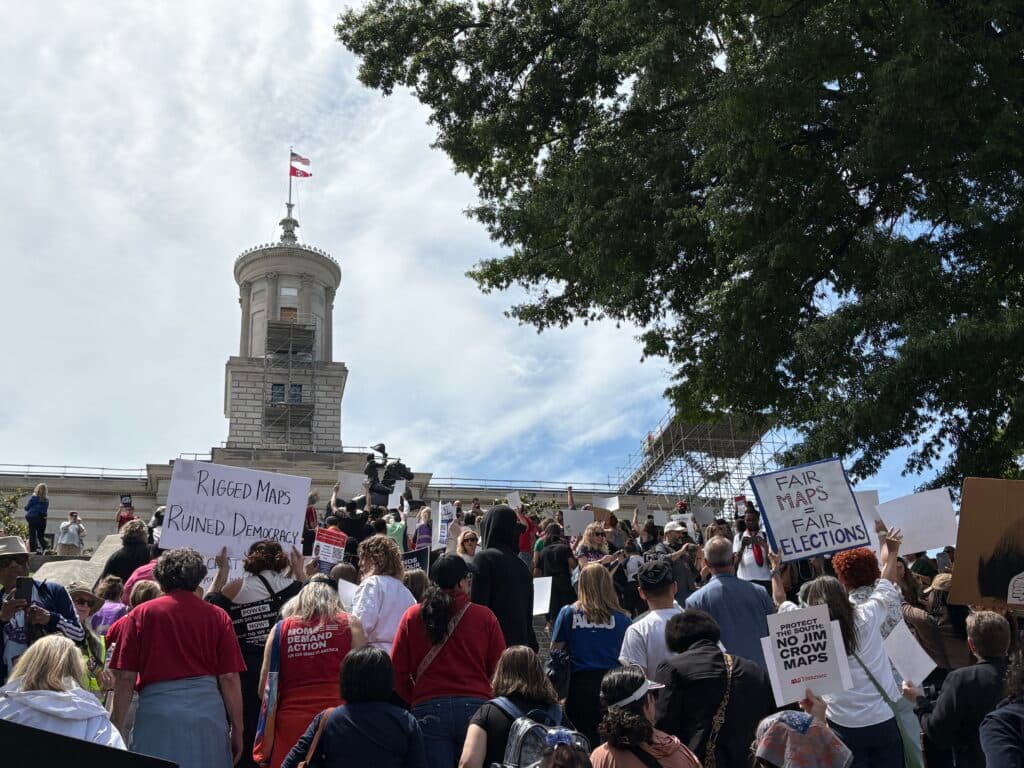
Three lawsuits now challenge the new map’s legality, with critics arguing the redistricting silences Black voters in Memphis. Hundreds of protesters marched up the steps of the state Capitol on May 5, demonstrating against the special legislative session called to redraw the congressional boundaries.
The timing of the redistricting effort, coming just days after the Supreme Court weakened voting rights protections, has drawn scrutiny from civil rights advocates and Democratic lawmakers.
The new map’s focus on diluting Memphis’s Democratic voting power affects the largest concentration of Black voters in Tennessee, potentially giving Republicans control of all nine congressional seats in the 2026 midterm elections.