NC House Overrides Stein Veto on Federal Scholarship Tax Credit Program
Two former Democrats joined Republicans to override Gov. Josh Stein’s veto of federal scholarship tax credit legislation in a key 73-46 House vote.

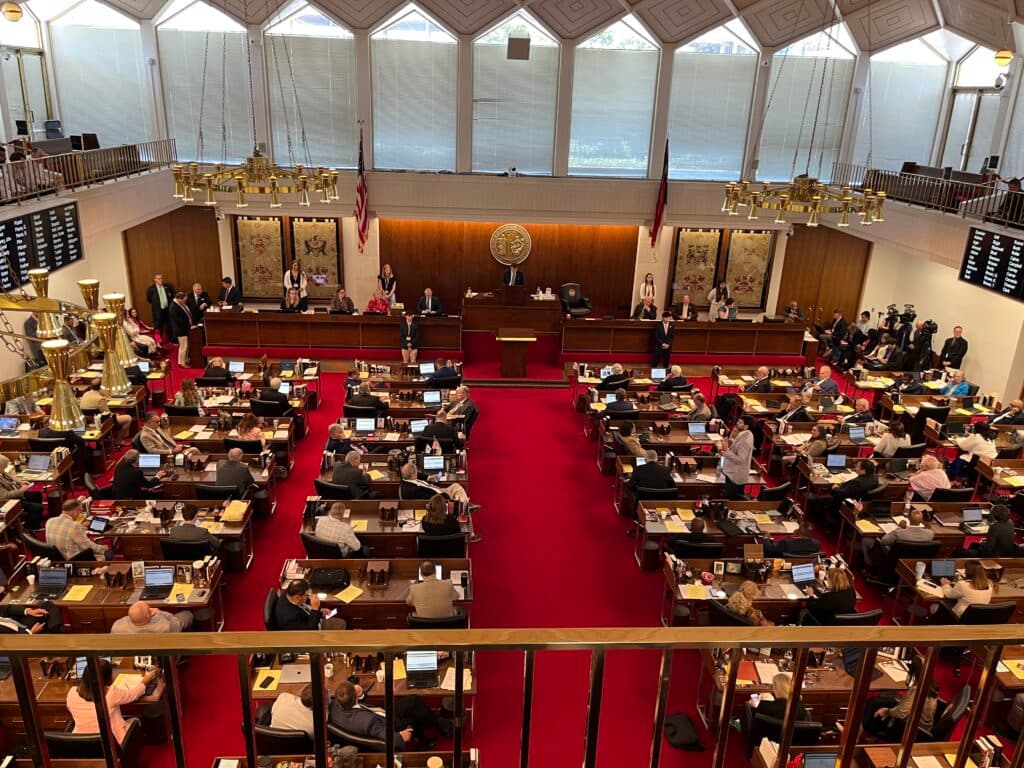
RALEIGH, NORTH CAROLINA — The Republican-led North Carolina House of Representatives voted 73-46 on Tuesday to override Governor Josh Stein’s veto of legislation that would allow the state to participate in a federal tax-credit scholarship program. Two unaffiliated representatives who recently left the Democratic Party provided key votes for the override.
Representatives Carla Cunningham and Nasif Majeed, both Mecklenburg County lawmakers who dropped their Democratic party affiliation earlier this year, joined all House Republicans in voting to override the veto. All House Democrats voted against the override.
The measure, House Bill 87, now moves to the state Senate, which must also vote to override Stein’s veto for the legislation to become law despite the governor’s opposition.
Federal Program Details
Under the federal program, donors to scholarship granting organizations would be eligible for tax credits of up to $1,700, according to the Library of Congress. Scholarship recipients must come from families that meet specific income limits and use the scholarships on qualified educational expenses.
Representative Neal Jackson, a Republican from Moore County, defended the legislation during floor debate. “It expands educational opportunities for all students,” Jackson said, adding that the tax credit will not cost the state anything.
Governor’s Opposition
In his August 6 veto message, Stein criticized the weakening of support for public schools for the benefit of private school vouchers. The governor said he would reconsider opting the state into the program if there was an opportunity for public schools to benefit from the federal initiative.
Representative Julie von Haefen, a Wake County Democrat, argued for sustaining the veto during Wednesday’s debate. Von Haefen said the tax credit will drain the federal treasury of billions of dollars that could otherwise support public education.
Political Implications
The successful override vote demonstrates the continued influence of school choice advocates in the Republican-controlled legislature. The support from Cunningham and Majeed, who switched from Democratic to unaffiliated status, proved essential in reaching the three-fifths majority required to override a gubernatorial veto.
The Senate vote on the override is expected in the coming weeks. Republicans hold a majority in the upper chamber, though the margin for override votes can vary depending on attendance and individual member positions on education policy.
The federal tax-credit scholarship program represents part of broader national debates over school choice policies and the role of public versus private education funding mechanisms.