Tennessee Legislature’s Special Session Eliminates Democratic Congressional District
Tennessee lawmakers eliminated the state’s only Democratic-leaning congressional district in a special session, raising concerns about minority voting rights.

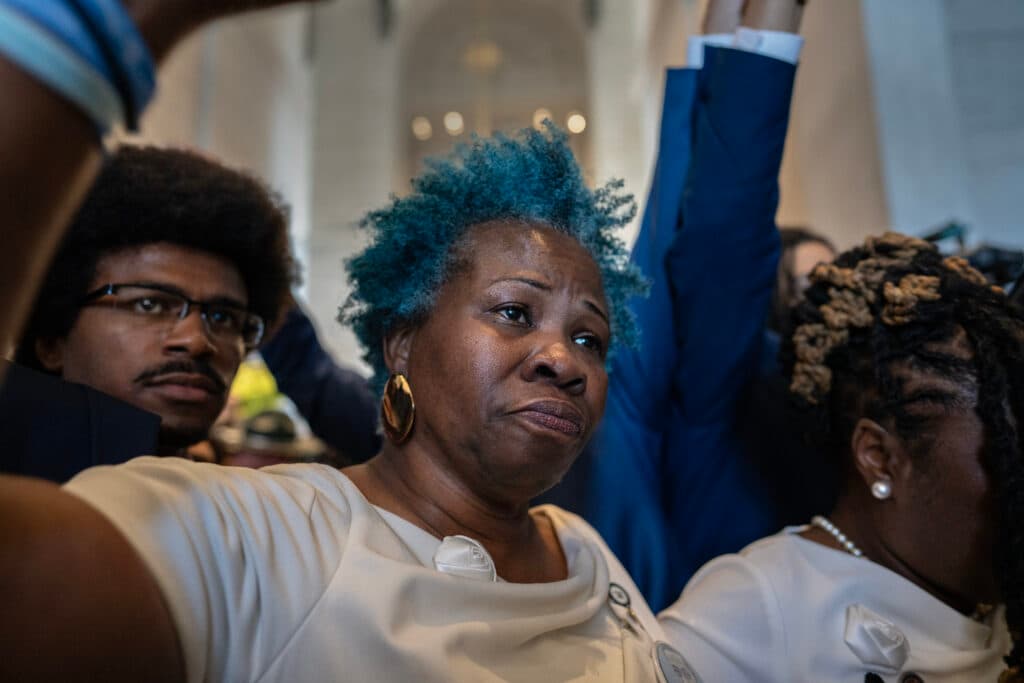
NASHVILLE, TENNESSEE — The Tennessee Legislature concluded a special session last week that eliminated the state’s only Democratic-leaning congressional district, drawing criticism from advocates who compared the move to rolling back decades of voting rights progress.
The redistricting changes particularly impact Tennessee’s predominantly Black congressional district, prompting concerns about the erosion of minority political representation in the state.
Voting Rights Under Fire
According to constitutional law expert Larry Woods, the Voting Rights Act of 1965 “was the primary success because it created political power for minorities in our country by guaranteeing them the right to choose and vote for candidates.” The recent legislative action comes after the U.S. Supreme Court weakened key provisions of the Voting Rights Act earlier this month.
The timing has drawn attention from President Donald Trump, who reached out following the Supreme Court’s decision to gut parts of the landmark civil rights legislation.
Historical Context of Tennessee Redistricting
Until 2022, major Tennessee cities including Nashville and Memphis were each represented by one member of Congress. The political party in power has traditionally redrawn congressional district lines following the U.S. census conducted every 10 years, as provided by the state constitution.
Tennessee’s congressional delegation historically supported voting rights legislation. U.S. Senators Albert Gore Sr. and Ross Bass voted for the Voting Rights Act of 1965, along with U.S. Representative Richard Fulton, who later served as Nashville mayor.
Legislative Response and Reactions
Representative Shaundelle Brooks, a Nashville Democrat, was photographed following the special session that eliminated Tennessee’s Democratic-leaning district. The redistricting effort has drawn comparisons to systematic attempts to reduce minority political influence.
Critics argue the legislative action represents a significant step backward from the progress achieved through the Civil Rights movement and subsequent voting rights protections. The changes affect not only partisan balance but also representation for Tennessee’s African-American communities.
The special session’s outcome reflects broader national tensions over voting access and redistricting practices, particularly in states where Republican majorities control the redistricting process. Tennessee’s action comes amid ongoing debates about federal oversight of state election laws and congressional district boundaries.