Tennessee Court Rules Officials Lack Standing to Block Memphis Guard Deployment
Appeals court says seven Democratic officials, led by Shelby County Mayor Lee Harris, cannot prove harm from the controversial military deployment that began in October.

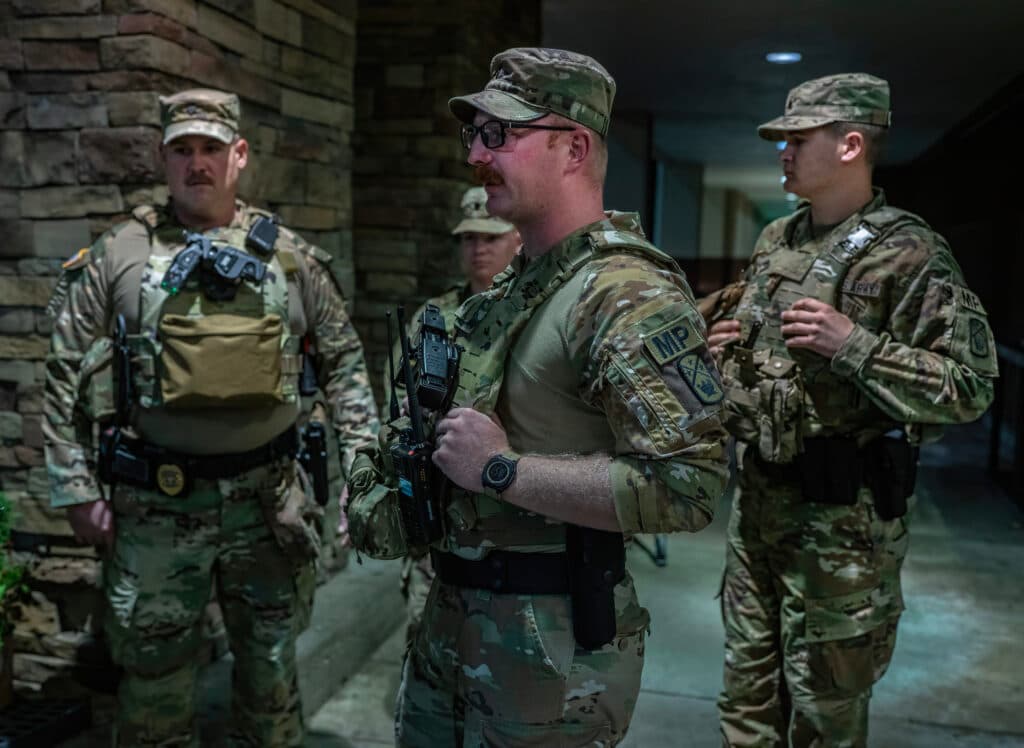
NASHVILLE, TENNESSEE — The Tennessee Court of Appeals has ruled that seven Democratic officials lacked legal standing to challenge Governor Bill Lee’s deployment of the state National Guard to Memphis, delivering a setback to efforts aimed at halting the military presence in the city.
The three-judge panel rejected the lawsuit filed by state and local officials led by Shelby County Mayor Lee Harris, who argued that Lee violated state law by deploying the National Guard without meeting the legal requirements of “circumstances amounting to a rebellion or invasion.”
The court did not rule on whether Lee’s October 2025 deployment violated the Tennessee Military Code, but instead determined that the elected officials could not demonstrate they were harmed by the deployment and therefore lacked standing to challenge the Republican governor’s decision.
Legal Battle Over Guard Deployment
The National Guard has been operating in Memphis since October 2025 as part of the Memphis Safe Task Force, a federal initiative created by President Donald Trump. The deployment sparked immediate legal challenges from Democratic officials who questioned Lee’s authority to use state military forces for the operation.
Initially, the legal challenge appeared successful when a Davidson County judge ruled in favor of the Democratic plaintiffs, temporarily blocking the deployment. The judge determined that the officials were likely to succeed in their argument that Lee had violated state military code provisions governing National Guard deployments.
However, an appeals court quickly intervened, blocking the lower court’s decision and allowing the National Guard to remain in Memphis while the case proceeded through the appellate process.
Standing Issues Derail Challenge
The appeals court’s ruling focused entirely on procedural questions rather than the substantive legal issues surrounding the deployment. The panel concluded that the seven officials could not establish that they suffered specific harm from the National Guard’s presence in Memphis.
This procedural dismissal means the core constitutional and statutory questions about gubernatorial authority to deploy the National Guard remain unresolved. The ruling effectively ends this particular legal challenge while leaving open the possibility that other parties with proper standing could pursue similar claims.
The Memphis Safe Task Force continues to operate with National Guard support, maintaining the federal-state partnership that has drawn criticism from Democratic officials throughout Tennessee. The task force represents part of the Trump administration’s broader approach to addressing urban safety concerns through federal-state coordination.
The ruling is a victory for Lee’s administration, which has defended the deployment as necessary for public safety operations in Memphis. The governor’s office has maintained that the National Guard deployment falls within executive authority to address public safety needs in coordination with federal initiatives.