Ten States Enact Voting Rights Laws as Supreme Court Weakens Federal Protections
As Supreme Court weakens federal voting protections, ten states have enacted their own voting rights laws with preclearance requirements abolished at federal level.

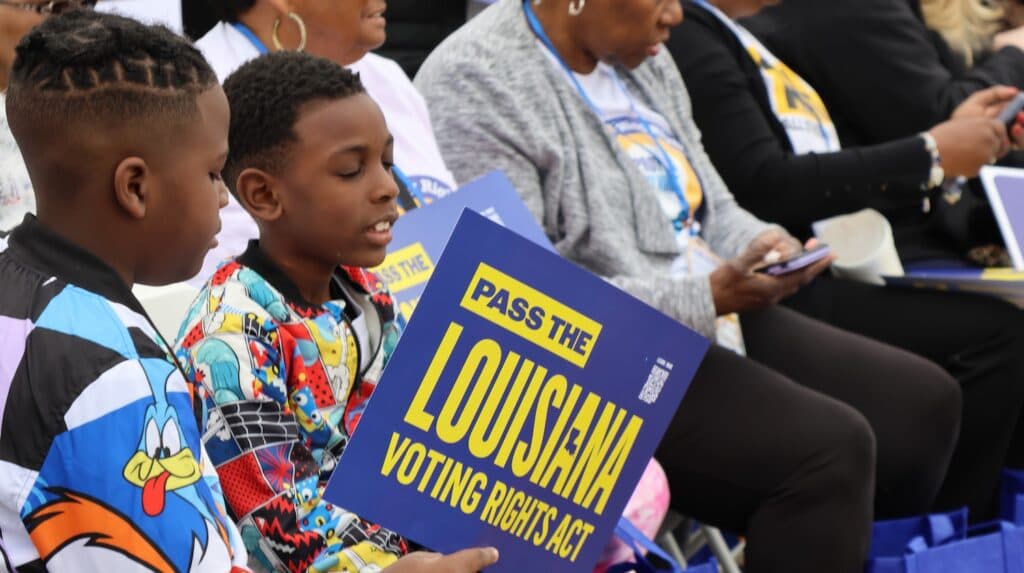
COLUMBUS, OHIO — Ten states have enacted their own versions of the federal Voting Rights Act as the U.S. Supreme Court continues to weaken the landmark 1965 civil rights law that protects minority voting rights.
The state-level legislation includes key provisions from the federal law, such as prohibitions against voter intimidation and vote dilution, which occurs when electoral maps distribute racial minorities across districts to prevent them from electing their preferred candidates.
Preclearance Requirements Fill Federal Gap
Most state voting rights acts require local jurisdictions to obtain state approval before changing election maps and policies. These preclearance provisions have become more significant since the U.S. Supreme Court rendered the federal preclearance requirement unenforceable in 2013.
The state laws typically direct courts to consider multiple solutions for discriminatory voting policies and encourage collaboration between voters and government officials to avoid litigation.
Current and Proposed State Legislation
California, Colorado, Connecticut, Illinois, Maryland, Minnesota, New York, Oregon, Virginia and Washington currently have their own voting rights acts. California enacted the first state-level law in 2002, while Maryland passed the most recent version in April.
This year, lawmakers in Alabama, Arizona, Florida, Louisiana, Michigan, New Jersey, Oklahoma, Rhode Island and Vermont have introduced similar legislation. In Louisiana, Democratic lawmakers proposed a voting rights law earlier this year aimed at strengthening protections against gerrymandering and voter suppression, but it died in committee.
State Laws Focus on Local Elections
Unlike the federal Voting Rights Act, state versions do not apply to congressional elections, focusing instead on state and local races. The laws aim to prevent discrimination in various forms of electoral processes at the local level.
Many state voting rights acts direct courts to examine multiple approaches when addressing discriminatory voting policies, emphasizing collaborative solutions between affected communities and election officials to resolve disputes before they reach the courtroom.
The movement reflects growing concern among state legislators about maintaining voting protections as federal oversight continues to diminish through Supreme Court decisions that have systematically weakened the original 1965 Voting Rights Act.