North Carolina Parents, Doctors Advocate for Insurance Coverage of Cancer Testing
Parents and doctors testified at the state capitol about legislation requiring insurance coverage for genetic testing that helps design personalized cancer treatments.

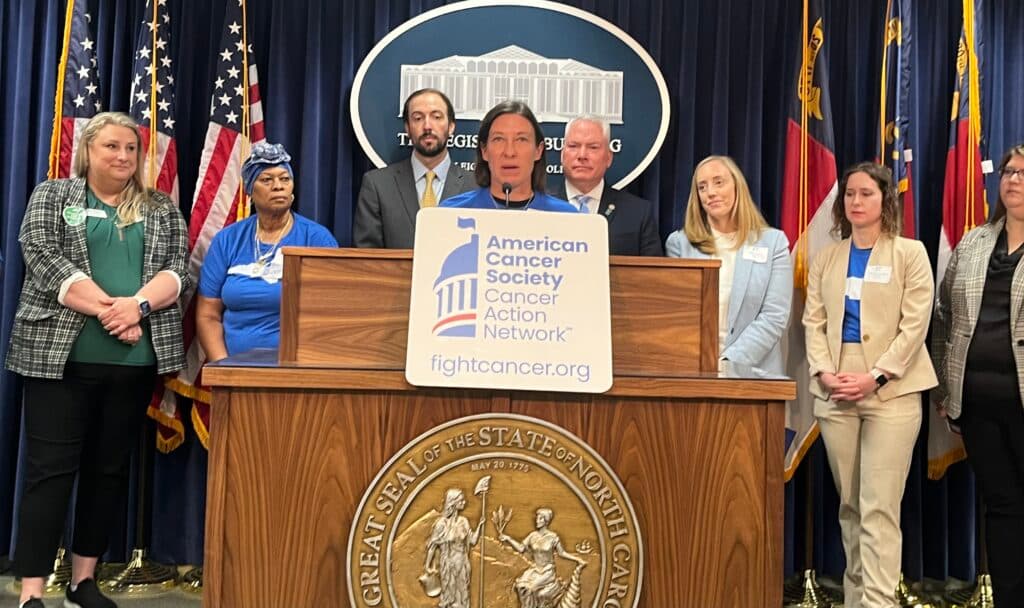
RALEIGH, NORTH CAROLINA — Parents and medical professionals gathered at the Legislative Building this week to advocate for legislation requiring insurance companies to cover biomarker testing, a diagnostic tool they say can save lives by helping doctors design more effective cancer treatments.
Ashley Fannin of Clayton, a pediatric oncology nurse whose 6-year-old son Mason was diagnosed with leukemia eight years ago, testified about how biomarker testing helped her son’s doctors develop a targeted treatment plan for his aggressive form of cancer. Mason, now 14, plays baseball and soccer and enjoys hunting, fishing and camping.
“It helped our doctors decide to increase the frequency of the steroids and chemotherapy from every three months to every month, and we went beyond the standard of care to do an extra year of treatment,” Fannin said at the May 12 news conference.
What Are Biomarkers?
Biomarkers are genetic material or proteins found in a patient’s tumors or blood that can be detected through advanced laboratory testing. In cancer diagnoses, doctors analyze these biomarkers to help tailor treatments to individual patients, potentially improving outcomes and reducing unnecessary treatments.
However, the tests can be expensive, and some insurance plans do not cover them, leaving patients responsible for the full cost. This financial barrier can prevent patients from accessing potentially life-saving diagnostic information.
Legislative Push for Coverage
Representatives from the American Cancer Society Cancer Action Network, the Arthritis Foundation and the Alzheimer’s Association are working to pass House Bill 567, which would require insurance plans to cover biomarker testing.
“In the cancer world, choosing the right treatment plan can mean the difference between a short life expectancy after diagnosis or walking away with a cure,” said Rep. Grant Campbell (R-Cabarrus), a medical doctor and one of the bill’s sponsors. “Biomarkers are intelligence that we can use to save lives and increase cure rates for patients.”
The legislation won easy approval in the state House last year but has not received a Senate hearing. Advocates are continuing to push for the bill’s advancement through the legislative process.
Impact on Patient Care
Supporters of the legislation argue that biomarker testing is a significant advancement in personalized medicine, allowing doctors to move away from one-size-fits-all treatment approaches toward therapies specifically designed for each patient’s unique genetic profile.
The testing can help doctors determine which treatments are most likely to be effective, potentially reducing the time patients spend on ineffective therapies and minimizing harmful side effects from treatments that may not work for their specific type of cancer.
For families like the Fannins, biomarker testing provided essential information that helped guide treatment decisions during a difficult time. The advocacy effort continues as supporters work to ensure other families have access to this diagnostic tool regardless of their insurance coverage.