Missouri AI regulation bill fails in House committee despite White House approval
House committee unanimously rejects AI safety bill 11-0 despite White House approval, citing enforcement concerns and drafting errors.

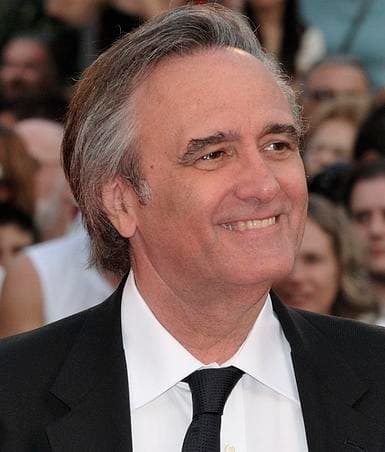
JEFFERSON CITY, MISSOURI — A Missouri House committee unanimously defeated artificial intelligence regulation legislation Tuesday, rejecting a bill that had received White House approval after the sponsor made revisions to address federal concerns.
The committee voted 11-0 against the measure sponsored by Republican state Sen. Joe Nicola of Grain Valley, which would have established that liability for harm caused by artificial intelligence systems always rests with a person or organization rather than the technology itself.
The defeat came despite Nicola’s efforts to modify the bill after meeting with President Donald Trump’s AI team. The senator had removed chatbot restrictions and scaled back liability guidelines for AI developers following feedback from the White House.
White House Approval Insufficient
“My hope was that working with the White House and them saying, ‘We’re neutral on it,’… [if] I communicated that to the senators and to the representatives, that that would have made them feel better and more at ease to vote for it,” Nicola told The Missouri Independent Tuesday evening. “But it sure didn’t.”
Committee members cited concerns about the bill’s lack of enforcement mechanisms and drafting errors as reasons for their opposition. The legislation had faced earlier resistance from Republican state Sens. Jamie Burger of Benton and Jason Bean of Holcomb, who worried it could threaten federal broadband funding.
Federal Funding at Stake
The senators had raised concerns that the AI regulations could jeopardize nearly $900 million in remaining federal funds for rural high-speed internet expansion. Their opposition stemmed from Trump’s December executive order on AI, which indicated states with “onerous” laws conflicting with “a minimally burdensome national policy framework for AI” would be ineligible for certain federal funding.
The executive order specifically targeted “non-deployment” funds from the $42.5 billion federal Broadband Equity Access and Deployment Program. Missouri stands to lose significant federal investment in rural internet infrastructure if its AI policies are deemed too restrictive under the new federal guidelines.
Legislative Process Stalled
The revised bill had successfully passed the Missouri Senate after Nicola’s modifications addressed White House concerns. However, the House committee’s unanimous rejection effectively ends the legislation’s chances for this session.
The defeat represents a setback for efforts to establish state-level AI oversight in Missouri, even as other states continue to grapple with how to regulate the rapidly evolving technology. Nicola’s bill represented one of the more moderate approaches to AI regulation, focusing primarily on liability rather than restricting AI development or deployment.
The committee’s action highlights the ongoing tension between state regulatory efforts and federal policy preferences under the Trump administration’s AI framework. Despite receiving federal approval, the legislation could not overcome local concerns about its implementation and effectiveness.