NC Democratic Leaders Demand Answers After GOP Pressure on Election Board
Jackson County GOP board members revealed they faced threats of removal for supporting a campus voting site, prompting Democratic calls for statewide investigation.

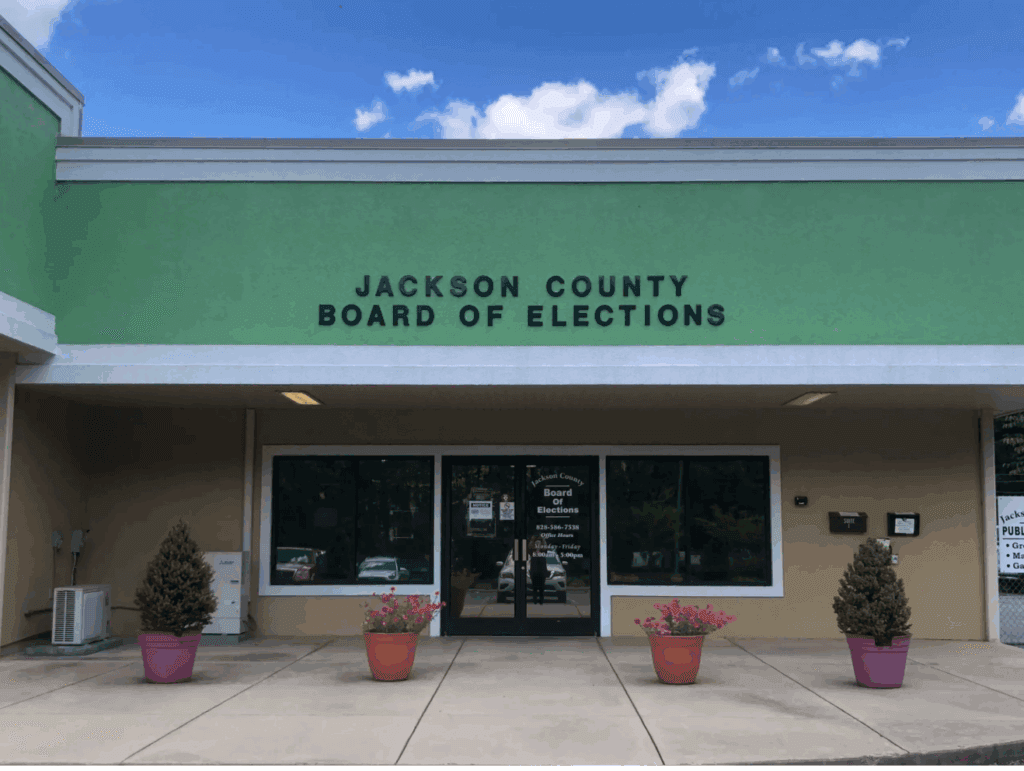
RALEIGH, NORTH CAROLINA — North Carolina Democratic Party Chairwoman Anderson Clayton and House Democratic Leader Robert Reives have called for transparency regarding who influenced Republican members of the Jackson County Board of Elections to oppose a campus early voting site at Western Carolina University.
The controversy arose during Tuesday’s Jackson County board meeting, where Republican Chairman Bill Thompson and member Jay Pavey revealed they had been instructed by Republicans in Raleigh to vote against the campus voting location for this fall’s elections.
Pavey disclosed at the meeting that he was warned of removal from the county board if he didn’t follow party directives. Despite the pressure, Pavey joined the board’s two Democratic members to approve the Western Carolina University early voting site in a 3-1 vote, with Thompson casting the sole opposition vote.
Call for Transparency
Rep. Reives expressed concern about the public admission of party interference in local election decisions. “It is troubling to hear that members of the Jackson County Board of Elections are receiving pressure and apparently threats of removal if they do not vote in lockstep with how Republicans in Raleigh tell them,” Reives said in a statement.
The Chatham County Democrat questioned the scope of such pressure tactics. “Taking these claims at face value, North Carolinians deserve to know who communicated these ‘orders’ and under what authority, and whether this is happening in other counties as well,” Reives said.
Board Member Resignations and Pressure
The voting site controversy has already led to personnel changes on the Jackson County board. Wes Hanemayer, the board’s third Republican member who supported the WCU campus site, resigned last week.
According to Pavey’s statements at the meeting, both he and Hanemayer had been summoned before the Republican Party Executive Committee to justify their support for the campus voting location. The pressure campaign represents an unusual public acknowledgment of behind-the-scenes political influence on local election administration.
The Jackson County Board of Elections oversees voting procedures and locations for the western North Carolina county, which includes Western Carolina University’s campus in Cullowhee. Early voting sites are typically established to increase voter access and accommodate different communities within a county.
Broader Implications
The public disclosure of party pressure on election board members raises questions about the independence of local election administration across North Carolina. County boards of elections are responsible for implementing voting procedures and determining polling locations based on voter access and logistical considerations.
Clayton and Reives’ statements suggest Democratic leaders view the Jackson County situation as potentially part of a broader pattern of political interference in election administration. Their call for transparency aims to determine whether similar pressure campaigns are occurring in other North Carolina counties.
The incident highlights ongoing tensions over voting access, particularly regarding campus locations that typically serve college-age voters. Western Carolina University serves thousands of students in the mountainous western region of the state.