Legal Expert Draws Parallels Between Kentucky Derby and Supreme Court Voting Rights
Legal experts at a Kentucky Derby gathering compared the Supreme Court’s voting rights decisions to a racehorse whose competitive days have ended.

COLUMBUS, OHIO — A local legal discussion at a St. Louis establishment on Kentucky Derby Day highlighted ongoing concerns about the U.S. Supreme Court’s recent decisions regarding voting rights, with observers drawing parallels between the famous horse race and the current state of civil rights legislation.
The conversation took place Saturday at The Royale Food and Spirits during a Derby Day gathering hosted by saloonkeeper Steve Smith. The discussion focused on what one participant described as “the continuing restoration of the Confederacy occurring these days courtesy of the U.S. Supreme Court.”
Supreme Court’s Impact on Voting Rights
The legal observer noted that the Supreme Court’s conservative majority has significantly weakened the Voting Rights Act, comparing it to “a racehorse whose winning days are behind him.” The Court previously damaged the landmark civil rights legislation in 2013 and has continued to limit its effectiveness.
According to the discussion, while intentional racial discrimination remains technically illegal, the practical enforcement mechanisms have been severely curtailed. “The overwhelming odds are the racing days for Voting Rights Act surely are over,” one participant observed.
Redistricting and Electoral Impact
The conversation highlighted how states can now engage in redistricting practices that effectively dilute minority voting power without explicitly mentioning race. In states with large Black populations, legislators can split up Black communities across multiple districts to create predominantly Republican-leaning areas.
When challenged about such practices, state legislatures can defend their actions by claiming partisan advantage rather than racial discrimination. The Supreme Court has indicated that partisan gerrymandering, unlike racial gerrymandering, does not violate federal law.
The legal expert noted that challengers can no longer examine the racial effects of gerrymandering as easily as before, making it significantly more difficult to prove discriminatory intent in court.
Historical Context
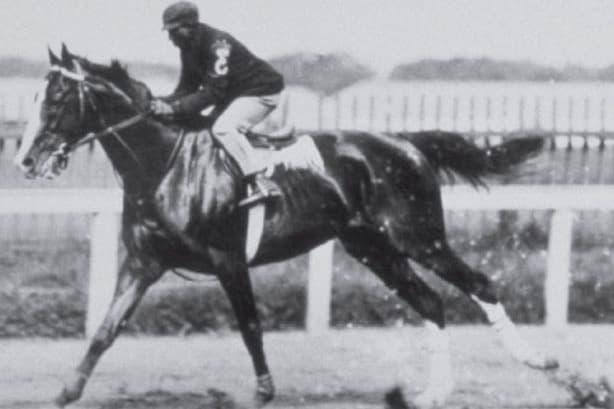
The Derby Day discussion also touched on the historical significance of the Kentucky Derby itself. James “Jimmy” Winkfield, who rode Alan-a-Dale to victory in the 1902 Kentucky Derby, was the last Black jockey to win the prestigious race, illustrating long-standing patterns of exclusion in American institutions.
The conversation took place during the annual Derby celebration, an event known for its 19th-century finery and mint juleps, which the legal observer described as “the greatest two minutes in sports.” The timing of the legal discussion during this historic racing event provided an apt metaphor for examining the current state of voting rights in America.
The informal gathering at The Royale Food and Spirits, described as drawing “an interesting collection of devotees,” provided a forum for discussing these legal and political developments affecting electoral participation across the United States.