Ohio Democrats Introduce Bill to Legalize Medical Aid in Dying
State lawmakers unveiled legislation allowing terminally ill Ohioans to end their lives with medical assistance, sparking debate over patient autonomy.

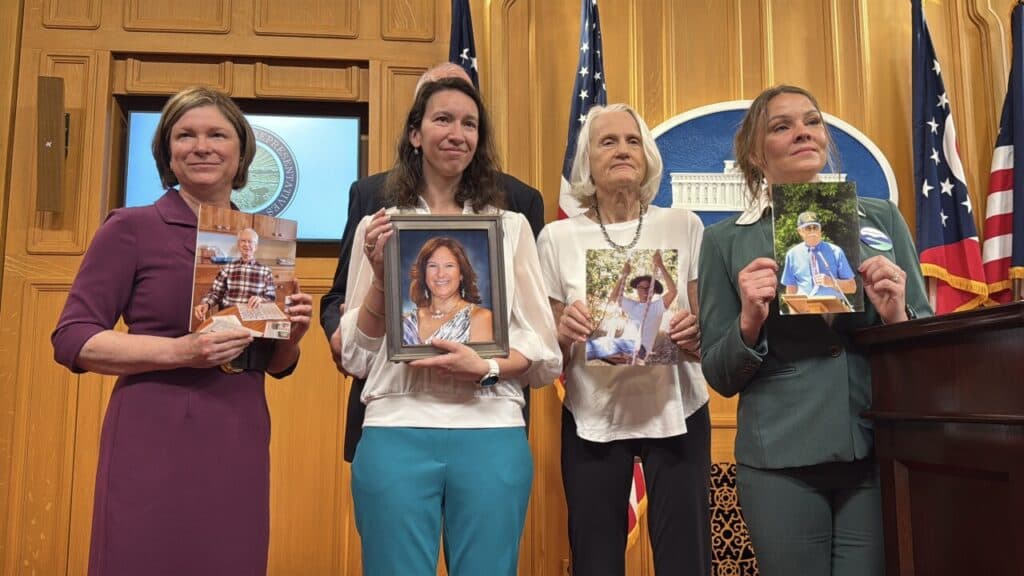
COLUMBUS, OHIO — A group of Ohio Democratic lawmakers introduced legislation that would allow terminally ill patients to legally end their lives with medical assistance, making Ohio potentially the 14th state to authorize such procedures.
State Rep. Eric Synenberg (D-Beachwood) unveiled the bill during a Statehouse press conference where family members held photographs of deceased loved ones who had suffered through terminal illnesses.
“It is a decision shared between them, their faith, their loved ones and their medical providers,” Synenberg said. “The question before us is whether we trust Ohioans to make that decision for themselves.”
Patient Stories Drive Legislative Push
Michael Oser, who was diagnosed with terminal cancer in late 2021, attended the press conference after his doctor informed him he has six months to live. Oser said he supports the legislation because he wants control over how he dies.
“I make this decision not in fear, not in panic, but with dignity, with my family’s support and with peace,” Oser said. “This is not about giving up.”
Oser expressed concern about the impact his death could have on his family. “I don’t want the pain and suffering, but not necessarily for me, but for my family,” he said.
Jim O’Neil, whose wife Addie died from cancer, also spoke in favor of the proposal. “She wished for a way to end her suffering on her terms, sparing herself the pain and her family the trauma of watching her slowly fade away,” O’Neil said. “She did not have that option.”
Bill Requirements and Protections
The legislation would authorize terminally ill patients who meet specific criteria to obtain medication to end their lives. Patients must be Ohio residents, at least 18 years old, receive a prognosis of six months to live from two separate doctors, undergo mental health evaluations, and be deemed competent to make healthcare decisions.
The bill includes several safeguards and protections. “No individual provider or facility is required to participate, and no one can be compelled to act against their own personal or religious beliefs,” Synenberg said.
Medical providers would receive immunity from prosecution, liability, disciplinary action or sanctions for either assisting with or refusing to provide the life-ending medication. The legislation requires informed consent and allows patients to withdraw their request at any time.
Insurance companies would be prohibited from withholding benefit payouts if someone dies through medically assisted suicide, according to Synenberg.
Opposition Voices Concerns
The proposal faces opposition from critics who argue the legislation could harm vulnerable populations. Social worker Jessica Rodgers spoke against the bill, contending it could be coercive to vulnerable groups because the medication used in assisted suicide costs less than comprehensive hospice care.
Ohio lawmakers modeled their proposal closely after Oregon’s medical aid in dying law. If passed, Ohio would join 13 other states that have legalized physician-assisted death for terminally ill patients.
The bill’s introduction comes as debates over end-of-life care continue across the United States, with proponents arguing for patient autonomy and opponents raising concerns about potential abuse and the sanctity of life.