Georgia Election Officials Await Guidance on Ballot QR Code Ban After Legislature Fails to Act
Georgia election officials face uncertainty after lawmakers failed to fund QR code ballot counting ban before July 1 deadline.

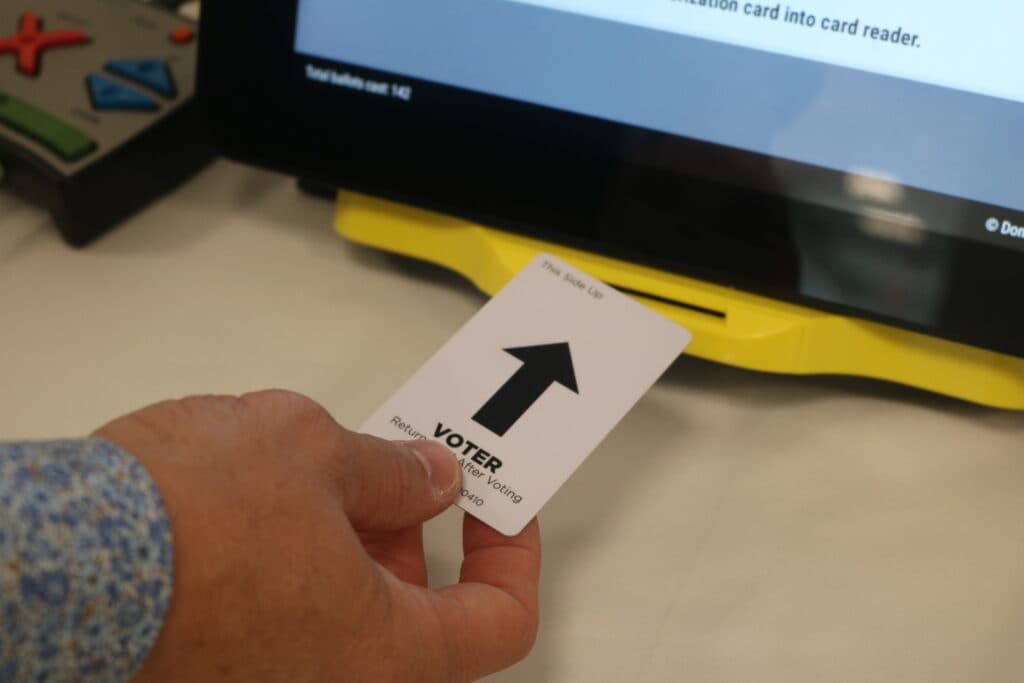
ATLANTA, GEORGIA — Georgia election officials find themselves in limbo as state leaders consider their next steps after lawmakers failed to address a looming ballot counting crisis before adjourning for the year.
Under a 2024 law, QR codes can no longer be used to count ballots after July 1, but state legislators never set aside funding for the necessary changes to comply with the ban. A proposal to extend the deadline for removing QR codes died on the final day of the legislative session earlier this month, leaving election officials across the state without clear direction for the November general election.
The uncertainty has created rare consensus among Georgia’s often-divided political factions. Elected officials, voting rights advocates and elections workers all agree that there currently doesn’t appear to be a clear answer for how elections will be conducted statewide this fall.
Special Session Possibility Looms
Gov. Brian Kemp could call lawmakers back to Atlanta for a special session to address the issue, though such action could interfere with sitting legislators’ fundraising efforts. State law prohibits legislators from raising campaign money during a legislative session, which could impact their ability to prepare for the May primary election or November general election.
The governor’s office has not announced whether Kemp plans to convene a special session to resolve the ballot counting crisis.
Voting Rights Groups Demand Action
Several voting rights organizations have mobilized to pressure state leaders for a solution. The ACLU of Georgia, the NAACP Georgia State Conference and the Southern Poverty Law Center signed onto a letter earlier this month urging immediate action to resolve the uncertainty surrounding the QR code ban.
The coalition of advocacy groups expressed concerns that the lack of clarity could disrupt election administration and potentially disenfranchise voters if county election officials are unable to properly prepare for the fall elections.
Timeline Pressure Mounts
With the July 1 deadline approaching, county election officials face mounting pressure to prepare alternative ballot counting methods without state funding or clear guidance from Atlanta. The 2024 law mandating the end of QR code ballot counting was designed to address concerns about election security and transparency, but lawmakers failed to provide the financial resources necessary for implementation.
Election administrators across Georgia’s 159 counties must now navigate the transition away from QR code systems while preparing for both the May primary and November general elections. The lack of legislative action has left many questioning whether the state will be ready to conduct elections under the new requirements.
The situation highlights the ongoing challenges facing Georgia’s election system as state leaders grapple with balancing security concerns, funding limitations and practical implementation timelines. Without legislative intervention or executive action, election officials will need to find alternative solutions to ensure compliance with the QR code ban while maintaining efficient ballot counting processes.