NC Democrats Criticize 1,000 Days Without State Budget as Workers Suffer
Senate Democrats slam legislature as NC nears 1,000 days without a state budget, with corrections officers working shifts meant for 25 people with only three staff.

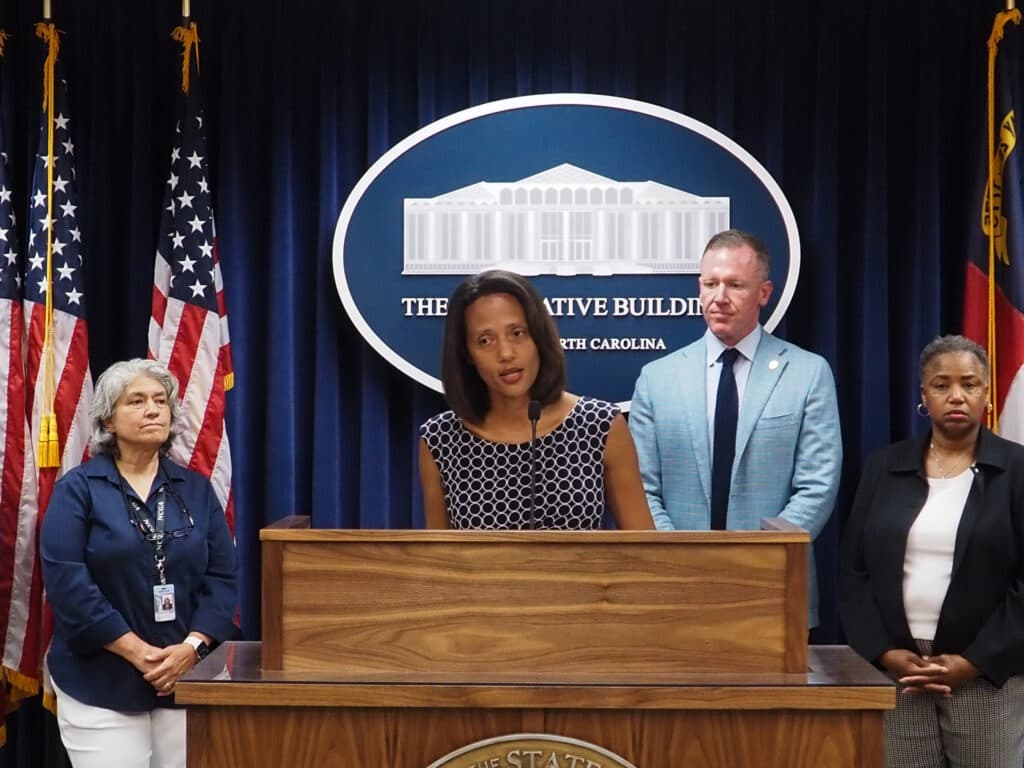
RALEIGH, NORTH CAROLINA — Senate Democratic leaders criticized the ongoing delay as North Carolina nears 1,000 days without passing a state budget, emphasizing the impact on state employees facing stagnant wages and staffing shortages.
Senate Democratic Leader Sydney Batch (D-Wake), Sen. Lisa Grafstein (D-Wake), and Sen. Michael Garrett (D-Guilford) held a press conference to highlight how the legislature’s budget inaction has affected state workers across various agencies.
Correctional Officers Face Staffing Crisis
Grafstein described alarming staffing conditions within state correctional facilities, citing an example from a corrections officer who arrived at work to find only three people assigned to a shift that normally required 25. The vacancies have created dangerous working conditions for remaining staff.
“These are the people this legislature has been leaning on for 15 years, asking them to do more with less, asking them to absorb the cuts,” Grafstein said. “‘Wait a little longer, the budget is coming,’ they keep being promised.”
Senate Bill 995, sponsored by Grafstein and Batch, proposes a one-time salary increase for law enforcement and correctional officers. The legislation also requires hazard pay of $3,000 for correctional officers when facilities operate below 70% of authorized staffing levels.
State Employee Pay Lags Behind Rising Costs
Ardis Watkins, executive director of the State Employees Association of North Carolina, explained that state worker compensation has not kept pace with inflation and healthcare cost increases. The stagnant wages have created recruitment and retention challenges across state departments.
“We have huge vacancy crises in these jobs simply because we can’t recruit at the pay we’re offering now,” Watkins said.
The Democratic senators called for wage increases that account for inflation and rising health insurance costs. They also advocated for targeted funding to address vacancies within state agencies that have struggled to maintain adequate staffing levels.
Broader Economic Concerns Raised
Beyond state employee compensation, the senators outlined additional priorities they believe should be addressed in a comprehensive budget. Their proposals include funding for small business loan programs and assistance for workers displaced by artificial intelligence technology.
The press conference marked nearly three years since the North Carolina General Assembly last enacted a full state budget. During this period, the state has operated under continuing resolutions and mini-budgets that maintain existing funding levels without addressing evolving needs or cost increases.
The budget impasse has particularly affected public safety and correctional facilities, where officials report difficulty attracting qualified candidates at current salary levels. The staffing shortages have forced remaining employees to work mandatory overtime and cover multiple positions.
Democratic leaders emphasized that the budget delay represents a failure of the legislature’s most basic constitutional responsibility. They argued that state employees deserve predictable compensation increases and adequate staffing support to perform their duties effectively.