Georgia Utility Commission Races Test Voter Loyalty After Power Rate Hikes
Rising electricity bills and data center expansion concerns are driving some lifelong Republicans to cross party lines in November’s Georgia utility commission races.

ATLANTA, GEORGIA — Two Georgia Public Service Commission seats up for grabs this November have become a battleground where rising electricity bills and data center expansion concerns are challenging traditional Republican loyalty in the state.
The races have drawn unprecedented voter attention to what were once obscure down-ballot contests, following the commission’s approval of multiple Georgia Power rate increases in recent years. Republicans currently hold a 3-2 majority on the five-member panel, but Democrats are targeting control of the utility regulatory body.
Cross-Party Voting Emerges Over Utility Bills
Nancy Lubeck, a Twiggs County resident who describes herself as a lifelong Republican, exemplifies the political crosscurrents shaping the races. She voted for Democrats Peter Hubbard and Alicia Johnson last year when they flipped two previously Republican-held PSC seats.
“We are still going to vote Democrat for the Public Service Commission, [and] most likely Republican for everything else,” Lubeck said. “We’re still mad about them giving all those increases to Georgia Power, and we just feel that all those people need to be changed out and need to be led by another party, so maybe they’ll do something different to help us.”
Lubeck said she participated in the GOP primary last month but plans to vote Democratic again in the November commission races, seeking what she calls a change of direction for the powerful regulatory body.
Data Center Growth Fuels Utility Concerns
The commission’s approval of massive energy infrastructure projects designed primarily to serve data centers has become a central campaign issue. Lubeck, who is fighting a proposed data center near her home, worries the buildout could drive future rate increases despite recent commission promises to marginally lower energy bills.
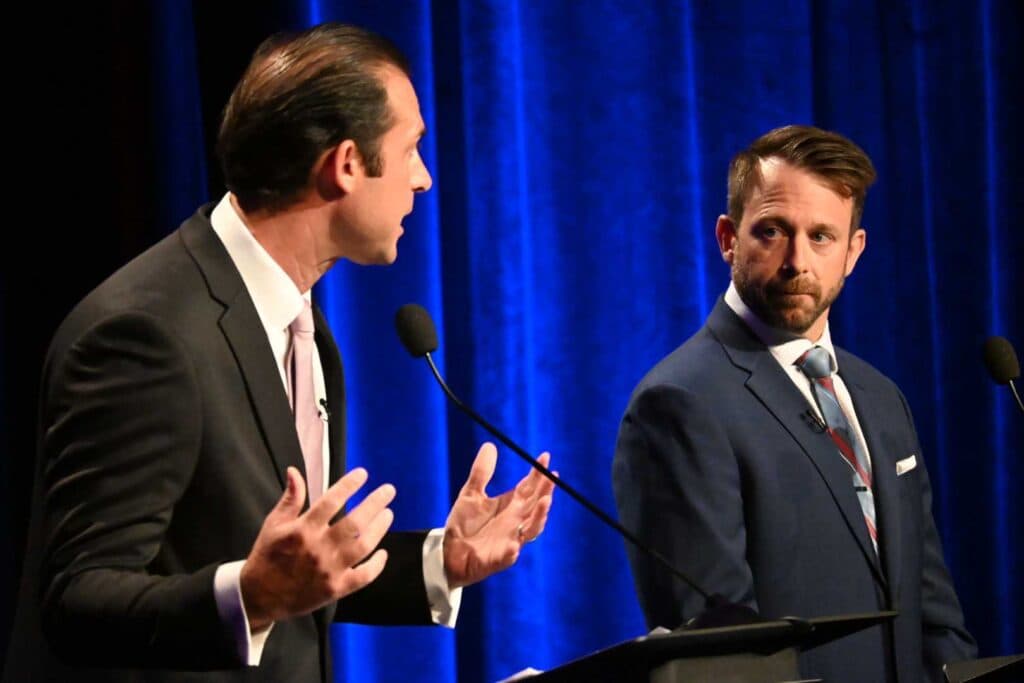
Republican candidates Bobby Mehan and Josh Tolbert participated in an Atlanta Press Club debate on March 31, 2026, as the campaign season intensified. The commission’s recent decisions on energy infrastructure and rate structures have elevated the profile of races that historically attracted little public attention.
Democrats Eye Commission Control
The Democratic gains in last year’s elections broke the commission’s previous all-Republican composition. Party officials hope the momentum from utility rate concerns and data center opposition can deliver the additional seats needed for majority control.
Voters like Lubeck represent a potential swing constituency — Republicans willing to cross party lines on utility regulation while maintaining party loyalty in other races. Their split-ticket voting approach could determine whether Democrats can capitalize on ratepayer frustration to reshape Georgia’s energy policy.
The November elections will test whether pocketbook concerns over electricity costs can override partisan voting patterns in a state where utility regulation increasingly intersects with economic development priorities.