Food Pantries Strain Under Rising Costs and SNAP Cuts
More than 4 million Americans have lost SNAP benefits since early 2025, and food pantries say they can’t fill the gap left by federal cuts and soaring grocery prices.

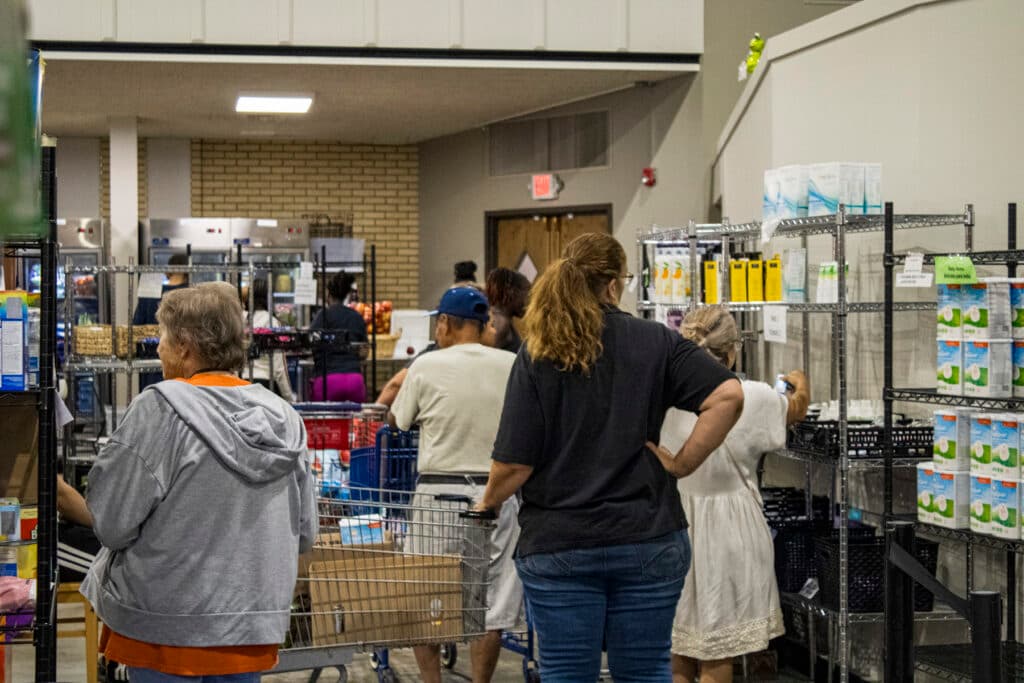
COLUMBUS, OHIO — Food pantries across the United States are scaling back what they offer and preparing for increased demand as grocery prices rise and millions of Americans lose access to federal food assistance, according to reporting from the Ohio Capital Journal.
Pantries Swap Staples for Cheaper Alternatives
At the Ritenour Co-Care Food Pantry just outside of St. Louis, ground beef and chicken legs have disappeared from the shelves. The nonprofit has replaced those staple proteins with ground chicken and hot dogs to manage surging costs and demand.
“We have to adapt just like everybody else,” said Angela Gabel, the pantry’s executive director, referring to the impact of rising grocery prices on food bank operations.
Last year, Ritenour spent approximately $120,000 on food. For this year, the pantry budgeted $180,000 — a 50 percent increase — though Gabel said even that figure may not be enough to meet demand.
The number of people seeking help has grown sharply. On one recent weekday morning alone, the pantry signed up seven new families and expected to enroll 15 by the end of the day. Gabel said more people are now traveling to multiple food pantries each month to keep their shelves stocked at home.
SNAP Losses Push More Families Toward Food Banks
The increased pressure on food pantries comes as millions of Americans lose access to the Supplemental Nutrition Assistance Program, or SNAP — the nation’s largest food assistance program. More than 4 million Americans lost SNAP benefits between February 2025 and February 2026, according to analyses of the most recent federal data cited by the Ohio Capital Journal.
Those numbers are expected to grow. The One Big Beautiful Bill Act, a broad tax and spending law signed by President Donald Trump last summer, requires states to further reduce SNAP enrollment. In Tennessee alone, 100,000 residents have already lost SNAP food aid following the law’s passage, according to the Tennessee Lookout.
States and counties that administer SNAP have been notifying residents since the fall that they must meet new eligibility requirements or lose their benefits.
‘I Just Don’t Think We Can Replace the Government’
Gabel expressed deep concern about whether community food pantries can absorb the additional need left behind by the federal cuts.
“I’m absolutely terrified,” Gabel said. “We will absolutely do our best, but I think we were meant to supplement SNAP or to help in emergency situations. I just don’t think we can replace the government.”
Her comments reflect a broader concern among food bank leaders nationwide: that the charitable food system, already strained by inflation and rising food costs, was never designed to serve as a primary safety net for millions of households.
As federal assistance shrinks and grocery prices remain elevated, food pantries like Ritenour Co-Care are left navigating an increasingly difficult gap between what families need and what nonprofits can realistically provide.