Tennessee Legislature Passes GOP-Favored Congressional Map After Court Ruling
Tennessee lawmakers approve redistricting that could give GOP all nine House seats by splitting Memphis’s majority-Black district after Supreme Court gutted voting protections.

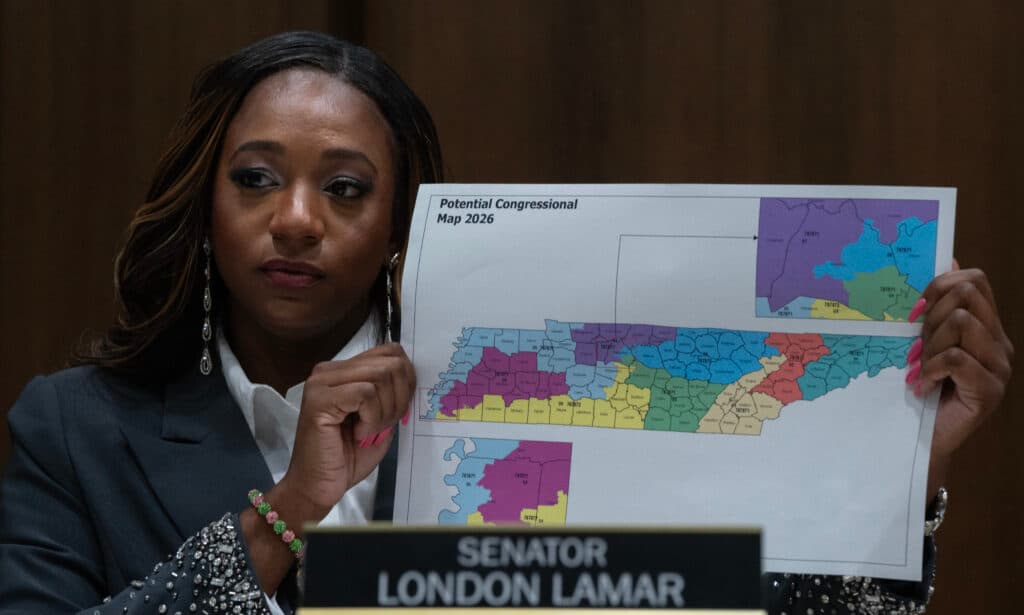
NASHVILLE, TENNESSEE — The Tennessee Legislature passed a new congressional redistricting map Thursday that could deliver all nine of the state’s U.S. House seats to Republicans, just eight days after the Supreme Court struck down key provisions of the Voting Rights Act.
Governor Bill Lee is expected to sign the legislation as lawmakers faced a tight 90-day deadline before the state’s August primary election. The new map eliminates Tennessee’s last majority-minority district by splitting Memphis across three separate congressional seats.
Memphis District Targeted
The redistricting specifically targets U.S. House District 9, which currently encompasses the entire city of Memphis and maintains a 60% Black voter majority. Republicans aim to flip this last Democratic-held seat in the state through the new boundaries.
“This map diminishes Memphis,” said state Sen. London Lamar, a Memphis Democrat, during floor debate where she urged Republicans to reject the proposal. “Racism doesn’t become less racist just because it’s called partisan.”
Supreme Court Ruling Enables Changes
The redistricting effort became possible after an April 29 Supreme Court decision that eliminated Voting Rights Act requirements for states with histories of racial discrimination to maintain majority-minority districts. Tennessee lawmakers had completed their regular legislative session on April 23, but Lee called them back for a special session following the court ruling.
The Supreme Court’s Republican-appointed majority has established through multiple rulings that congressional and legislative maps are legal as long as partisan motivations can be demonstrated, rather than racial ones.
Legal Challenges Expected
Democrats plan to file lawsuits challenging the new map, arguing that Republicans are improperly changing electoral rules too close to an election and that the redistricting was based on racial demographics rather than legitimate political considerations.
Protesters gathered at the state capitol during the special redistricting session to oppose the new boundaries. The controversy highlights ongoing national debates over voting rights and political representation following recent federal court decisions limiting civil rights protections.
If signed as expected, the map would represent a significant shift in Tennessee’s congressional delegation, potentially creating a 9-0 Republican advantage in a state that currently sends one Democrat to the U.S. House of Representatives.