Georgia Democrats Pull More Primary Ballots Than Republicans for First Time Since 1998
Democratic voters outnumbered Republicans in Georgia’s primary for the first time since 1998, with party officials calling it a sign of growing momentum for November.

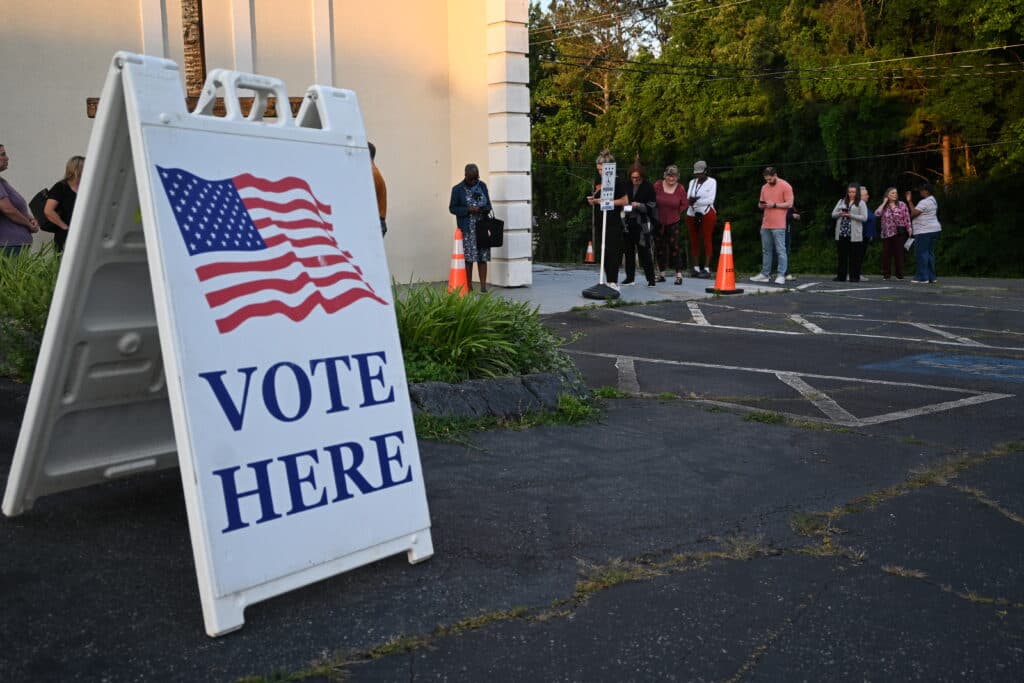
ATLANTA, GEORGIA — Democratic voters outnumbered Republican voters in Georgia’s May 19 primary election for the first time since 1998, drawing more than 1 million ballots compared to Republicans’ nearly 940,000. Party officials see this as a sign of growing momentum ahead of November’s general election.
The Democratic advantage represented 52.6% of the more than 2 million ballots cast statewide, compared to 45.4% for Republicans. The primary featured no races with both Democratic and Republican candidates on the same ballot, requiring voters to choose between party-specific ballots at polling locations.
Democratic Leadership Sees Growing Momentum
Democratic Party of Georgia Chairman Charlie Bailey highlighted the margin as the largest for Democrats since 1998, showing voter enthusiasm for the party’s nominees. U.S. Sen. Jon Ossoff secured the Democratic nomination for re-election, while former Atlanta Mayor Keisha Lance Bottoms won the Democratic gubernatorial primary.
“It’s just another piece of evidence of growing Democratic momentum, the work of the party, the strength of Jon Ossoff, the strength of Keisha Lance Bottoms coming into this governor’s race,” Bailey said. “People are fed up with (Republicans), and what those numbers in the primary tell you is that momentum is building towards November, when they’re going to vote these Republicans out.”
Historical Context and Comparison
The results mark a significant shift from recent midterm elections. In 2018, when President Donald Trump was in the White House and Georgia’s governor’s race was open, Republicans pulled more ballots than Democrats by approximately 52% to 48%.
Political observers note that comparing ballot draws has limitations as a predictive measure. Some voters select the opposing party’s ballot to influence local races in areas dominated by that party, while others may vote strategically to promote weaker opponents for their preferred candidates in the general election.
November Implications
The primary turnout data comes as both parties prepare for competitive races in November. Ossoff will defend his Senate seat, while Bottoms will face the Republican gubernatorial nominee in what is expected to be a closely watched contest.
Bailey emphasized that the primary results demonstrate organizational strength and voter engagement that could translate to general election success. The Democratic Party of Georgia has invested heavily in voter outreach and registration efforts since the 2020 election cycle.
More than 2 million Georgians participated in the May 19 primary across the state’s 159 counties, with polling locations like Shiloh Hills Baptist Church in Kennesaw reporting steady voter turnout throughout the day.