Supreme Court Weighs Police Use of Cellphone Location Data in Criminal Cases
The Supreme Court heard arguments on whether police can continue using geofence warrants to obtain cellphone location data, with justices seeking balance between law enforcement needs and privacy rights.

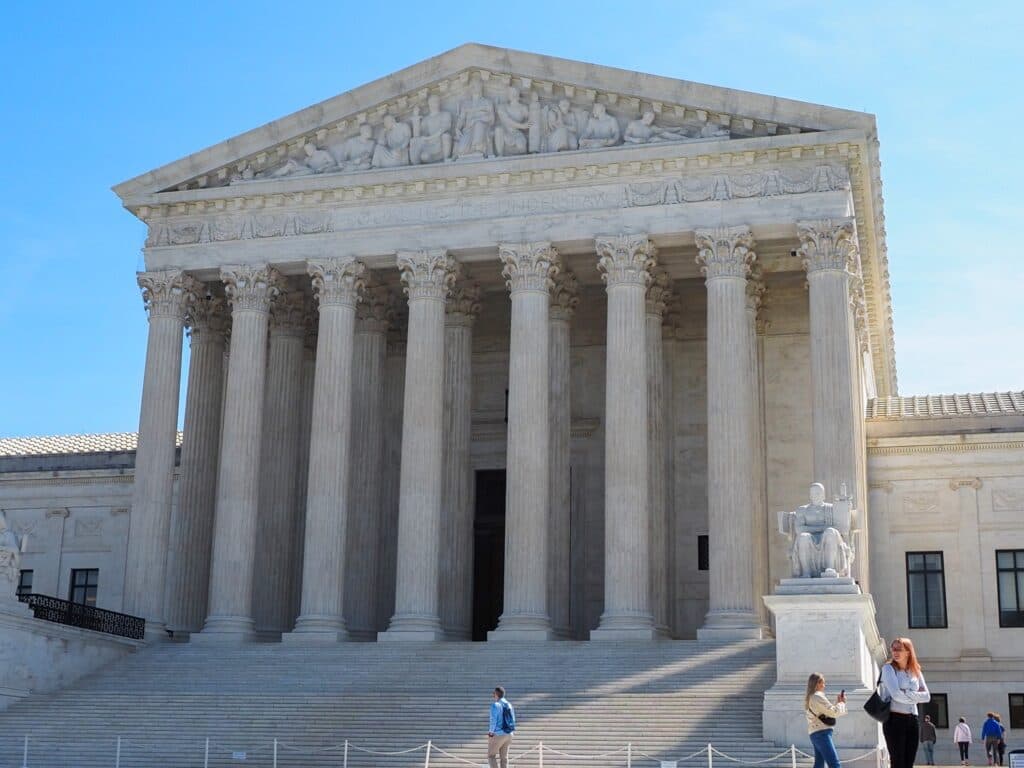
WASHINGTON, D.C. — The U.S. Supreme Court on Monday appeared inclined to permit law enforcement agencies to continue obtaining warrants for cellphone location data near crime scenes, though justices expressed concerns about balancing investigative needs with privacy protections during oral arguments.
The case stems from a Virginia bank robbery investigation where police used a geofence warrant to identify suspects, raising questions about how the Fourth Amendment’s protections against unreasonable searches apply to modern digital investigations.
Justices Seek Middle Ground on Digital Privacy
Several justices questioned both sides during Monday’s oral arguments, with no justice voicing outright support for completely prohibiting geofence warrants. Justice Amy Coney Barrett highlighted the complexity of the issue, telling U.S. Deputy Solicitor General Eric Feigin that while he had described his opponent’s position as maximalist, “there’s a risk of the government’s position being maximalist the other way.”
“I was just going to say this seems very complicated from the user’s point of view, frankly,” Barrett said during the proceedings, according to the Ohio Capital Journal.
Geofence warrants allow police to identify phones within a specific geographic area during a certain time period. Over the past two decades, these warrants have become a major investigative tool for law enforcement agencies nationwide.
Widespread Law Enforcement Support
The data obtained through geofence warrants can provide leads in cases where suspect identities are unknown. A broad bipartisan coalition of state attorneys general has urged the Supreme Court to uphold the use of these warrants, underscoring their perceived importance to criminal investigations.
The warrants work by requiring technology companies to provide location data for all devices within a defined area during a specific timeframe, allowing investigators to develop suspect lists in cases that might otherwise go unsolved.
Privacy Advocates Raise Constitutional Concerns
Civil liberties groups oppose geofence warrants, arguing they create digital dragnets that capture data from innocent people who happen to be in the wrong location at the wrong time. These advocates contend that accessing data on everyone within a geographic area constitutes a general warrant prohibited by the Constitution.
The Fourth Amendment to the U.S. Constitution prohibits unreasonable searches and seizures, but the Supreme Court continues to grapple with how these protections apply as smartphones and location-tracking apps have become ubiquitous in American life.
The justices’ eventual decision will significantly impact how easily investigators can obtain location data from technology companies and will influence privacy protections for millions of smartphone users across the country.
The court has not indicated when it will issue its ruling in the case, which originated from the Virginia bank robbery investigation that successfully used geofence warrant data to identify and apprehend suspects.