North Carolina Dentists Push for $80M Medicaid Payment Increase
State senators from both parties unite behind $80M plan to boost Medicaid dental payments after 18 years of stagnant rates leave patients struggling to find care.

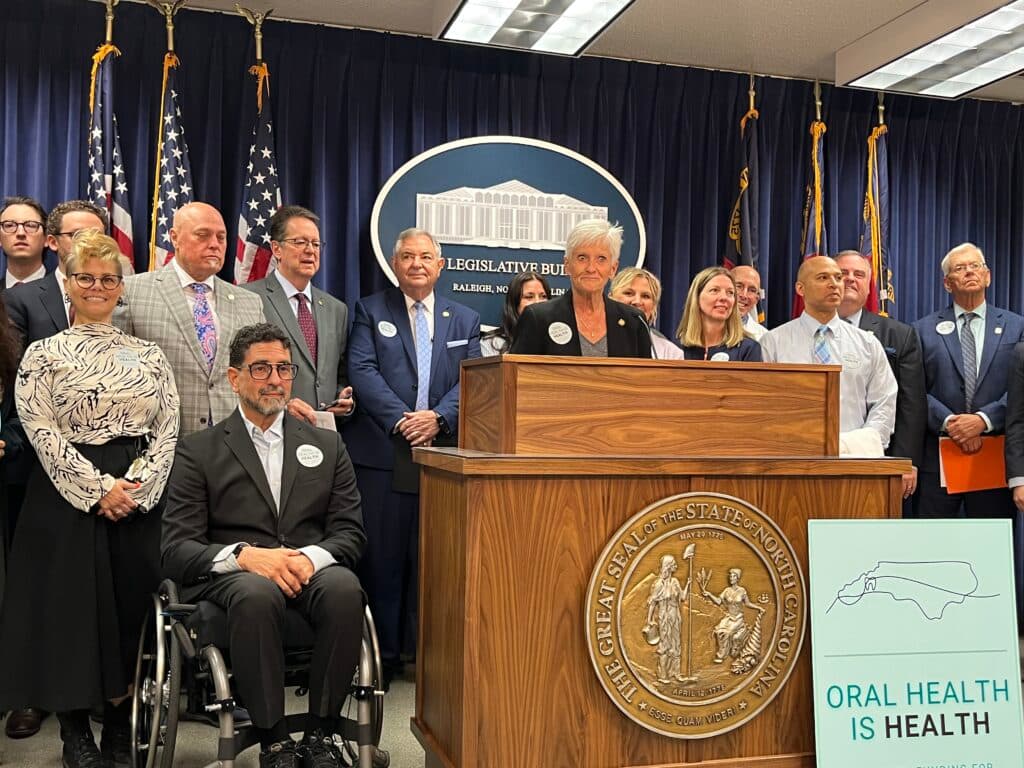
RALEIGH, NORTH CAROLINA — Bipartisan state senators and dental advocates launched a public campaign Tuesday for an $80 million increase in Medicaid reimbursement rates for dentists, citing widespread access problems for low-income patients who often suffer from untreated dental problems.
State Senators Gale Adcock (D-Wake), Jim Burgin (R-Harnett) and Kevin Corbin (R-Macon) introduced legislation that would boost Medicaid reimbursement rates for dental care from 34% of commercial rates to 50%. The payment rates have remained unchanged since 2008, leaving North Carolina ranked in the bottom third nationally for Medicaid dental reimbursements.
“Children are living with pain,” said Crystal Adams, director of the N.C. Oral Health Collaborative. “Adults are unable to find employment because of their oral health. That should not be the reality in our state.”
Limited Access Forces Patients to Suffer
The low reimbursement rates have created a crisis where most dentists refuse to accept Medicaid patients because they lose money on treatments. This leaves many children and adults with Medicaid coverage unable to find dental care, often resulting in painful, untreated tooth decay.
Adams and the legislators spoke at a news conference Tuesday to highlight the urgent need for increased funding to improve oral healthcare access for Medicaid beneficiaries across the state.
“It’s impossible to be healthy without adequate attention to oral health,” Adcock said. “Surveillance and screening, preventive measures like cleanings, fluoride applications and sealants, and timely interventions like fillings, restorations, and extractions all contribute to overall health.”
Financial Impact on Dental Practices
Dentists say the current Medicaid reimbursement structure forces them to operate at a loss when treating low-income patients. The proposed $80 million appropriation would partially close the gap between Medicaid payments and the actual costs of providing dental care.
The legislation represents a rare bipartisan effort to address a healthcare access issue that affects thousands of North Carolina residents who rely on Medicaid for their medical coverage. Supporters argue that improved oral health access could have broader economic benefits by helping adults secure employment and reducing emergency room visits for dental problems.
The bill comes as healthcare advocates continue to document the connection between untreated dental problems and broader health complications, particularly among children and low-income adults who have limited healthcare options.