Jesse Jackson Jr. denounces NC gerrymandering, school funding inequities
Former congressman links recent court rulings on redistricting and school funding to broader pattern of racial discrimination during Raleigh address.

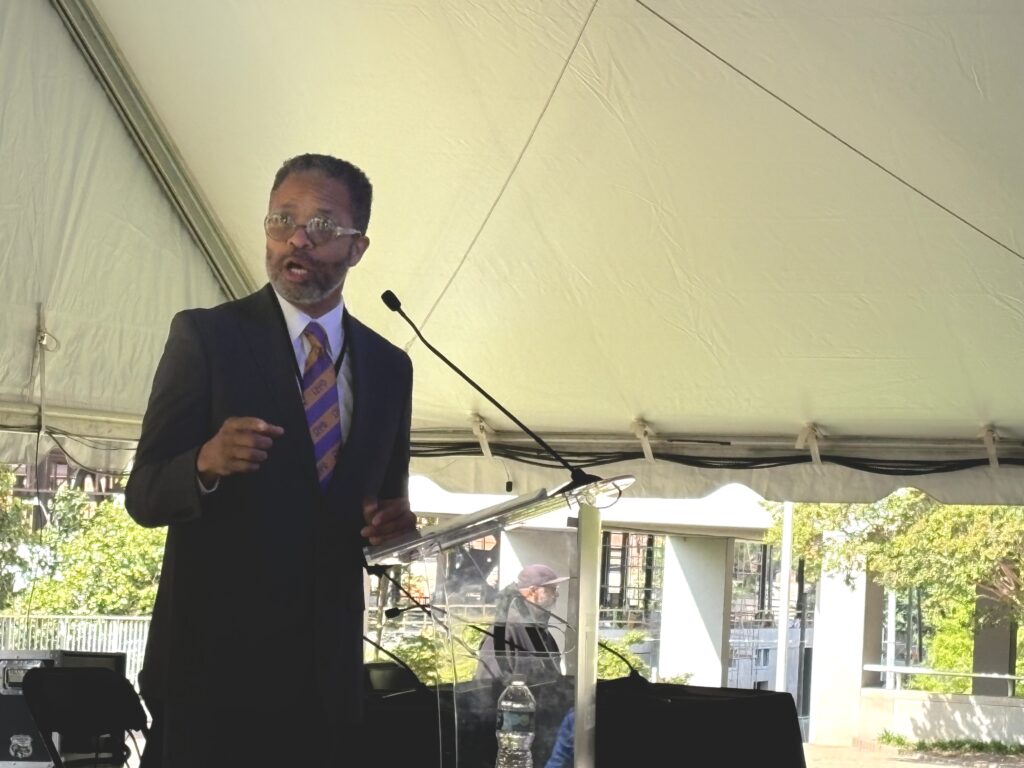
RALEIGH, NORTH CAROLINA — Former Illinois U.S. Rep. Jesse Jackson Jr. criticized recent court decisions affecting redistricting, voting rights, and public education during a Wednesday speech in the state capital, describing them as part of a broader pattern of racial discrimination across North Carolina and the South.
Jackson addressed members of the Divine Nine fraternities and sororities, condemning what he characterized as systematic efforts to undermine equal representation and educational opportunities. The civil rights activist focused his remarks on recent state and federal judicial rulings that have reshaped the political and educational situation in North Carolina.
Redistricting and Voting Rights Under Fire
The former congressman took aim at court decisions related to legislative and congressional redistricting in North Carolina. Jackson framed these rulings as the latest chapter in a historical pattern of measures designed to limit African American political participation and representation.
“North Carolina, I’ve been gone for a [while],” Jackson told the audience, according to his prepared remarks. His speech connected contemporary legal battles over electoral maps to broader civil rights struggles that have defined the region for decades.
The redistricting issue has remained contentious in North Carolina, where legal challenges over legislative and congressional maps have continued through multiple election cycles. Courts at both state and federal levels have weighed in on disputes over whether district boundaries constitute illegal gerrymandering.
Public Education Funding Disparities Highlighted
Jackson also addressed what he described as the denial of equal funding for public schools, linking educational inequities to the same discriminatory patterns he identified in voting rights cases. The former representative argued that recent court decisions have perpetuated rather than remedied longstanding disparities in educational resources and opportunities.
North Carolina has faced ongoing litigation over school funding adequacy and equity, with advocates arguing that the state has failed to provide sufficient resources to ensure every student receives a sound basic education. These legal battles have spanned years and involved complex debates over funding formulas and resource allocation.
Historical Context and Civil Rights Legacy
The speech drew connections between contemporary political and educational challenges and the broader civil rights movement. Jackson, son of civil rights leader Rev. Jesse Jackson Sr., positioned current disputes within the historical context of the struggle for equal rights and representation in the South.
His appearance before the Divine Nine organizations — historically Black fraternities and sororities — underscored the ongoing role of these groups in advocacy and community organizing. These organizations have long served as platforms for discussing civil rights issues and mobilizing political engagement within African American communities.
Jackson served in the U.S. House of Representatives from Illinois from 1995 to 2012, when he resigned amid federal corruption charges. He later served time in federal prison before his release in 2015.
The former congressman’s visit to North Carolina comes as the state continues to grapple with legal challenges over both redistricting and education funding, issues that remain active in state and federal courts.